
A shared operational source
Customer, account, product, transaction, loan, deposit, approval and ledger information can be managed through connected workflows rather than isolated records and offline reconstruction.
COREWAVE CBA · BY PINTOP TECHNOLOGIES
One core banking platform for managing customers, accounts, transactions, deposits, lending, approvals, general ledger activity, reporting and connected digital channels — through a single controlled operational system.
 Lagos, Nigeria
Built for regulated and structured financial operations
Microfinance · Mortgage · Digital lending · Cooperatives · Financial groups · Legacy migration
WHY ONE CORE
Fragmented systems force teams to repeat work, rebuild reports, reconcile disconnected records and wait for difficult integrations.
CoreWave CBA brings essential banking activity into one controlled environment.
Customer, account, product, transaction, loan, deposit, approval and ledger information can be managed through connected workflows rather than isolated records and offline reconstruction.
Products, permissions, workflows, limits, accounting mappings, reports, integrations and deployment responsibilities are scoped for each implementation.
One platform foundation for many institutions.
Product activity connected to the ledger.
APIs for channels and partner services.
Roles, approvals and attributable activity.
ONE PLATFORM. MANY INSTITUTIONS.
CoreWave CBA can support multiple institutions or financial business entities within one governed platform — while maintaining controlled institutional boundaries.
Shared platform capabilities administered centrally, while institution-level products, users, branches, records and configurations remain separated.
Institution-specific customers, accounts, transactions, products and operational records.
Institution-level users, roles, branches, permissions and approval structures.
Product rules, limits, fees, workflows, reports and accounting mappings configured for each institution.
Access boundaries and privileged operations managed through defined roles and attributable activity.
SEE THE INSTITUTION THROUGH OPERATIONAL VIEWS
Each area connects to the same underlying customer, account, transaction and financial information — rather than becoming another disconnected module.
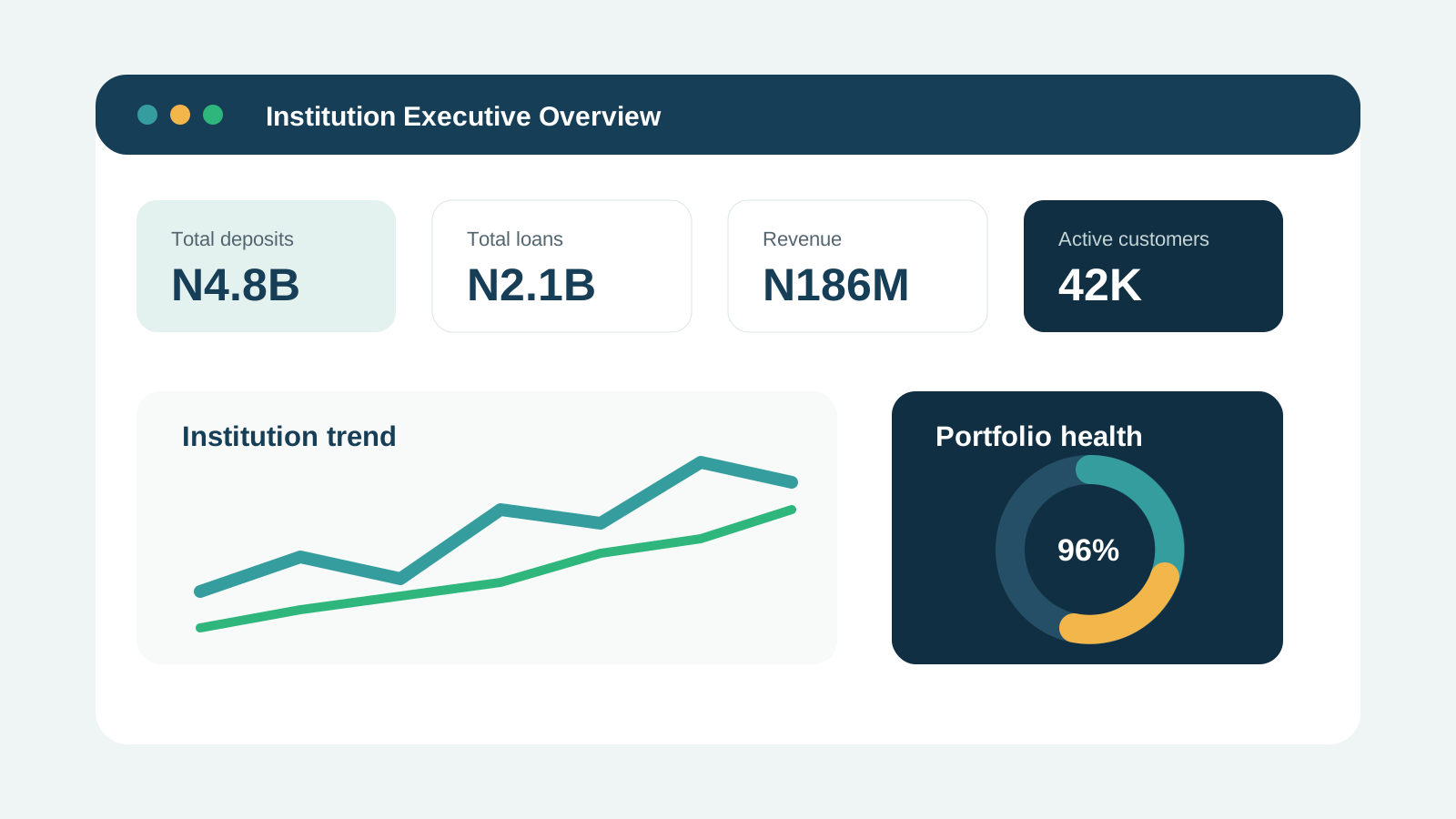
INSTITUTION-WIDE VISIBILITY
Review deposits, loans, revenue, customer activity, portfolio position and operational exceptions through a consolidated management view.
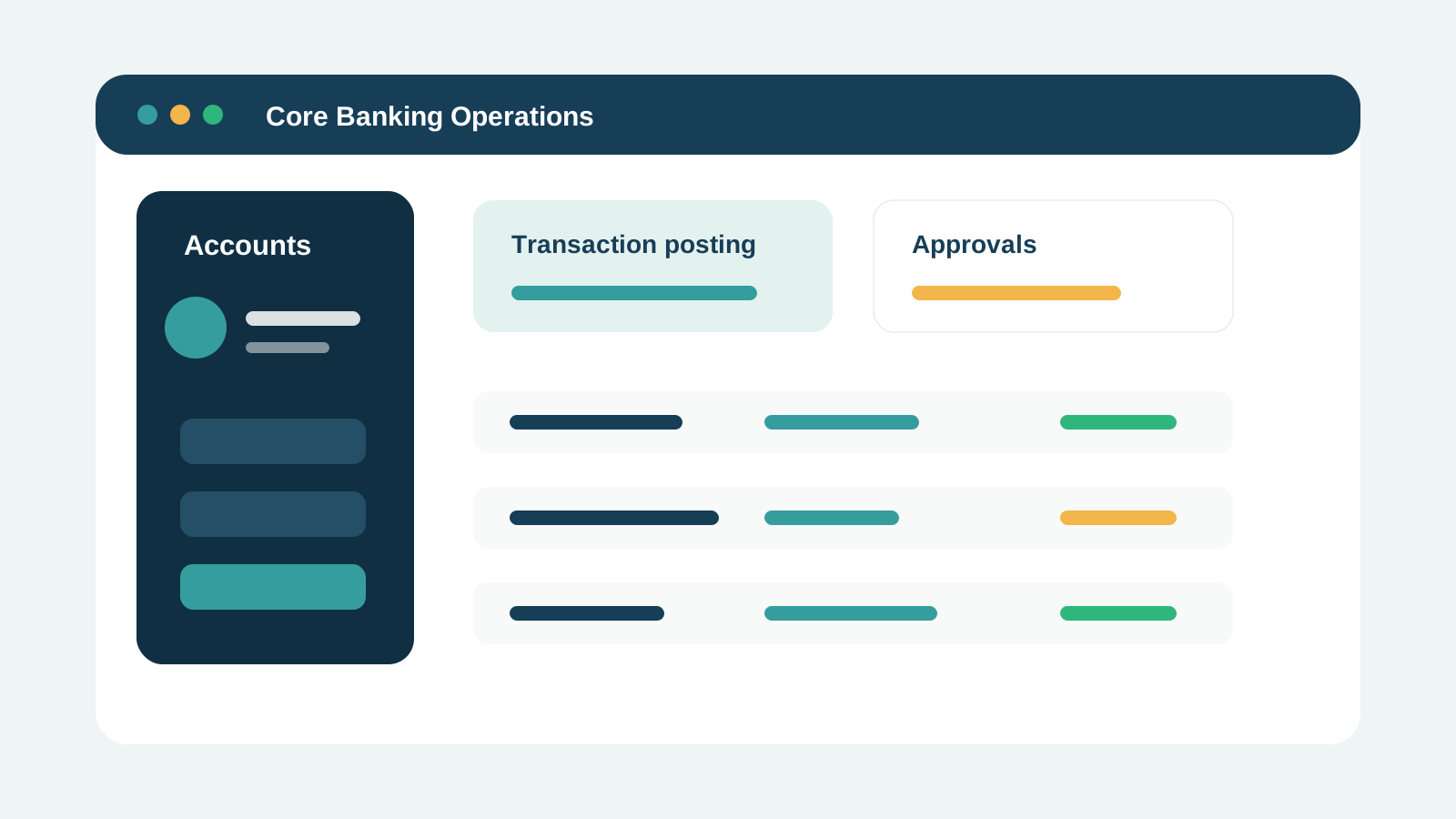
ACCOUNTS, POSTINGS AND APPROVALS
Manage customer accounts, internal postings, transfers, reversals, teller activity, limits and maker-checker approvals through controlled workflows.
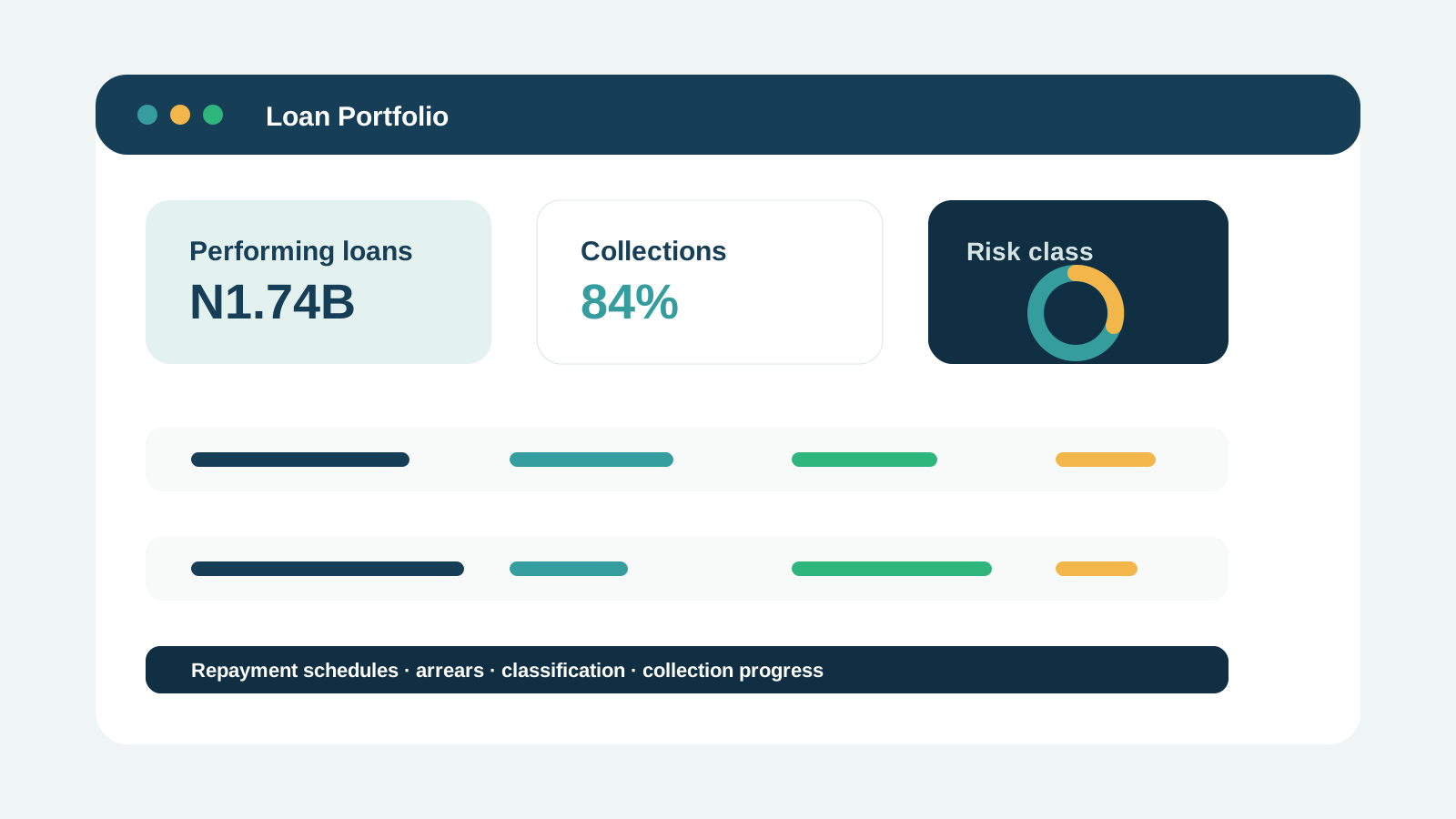
ORIGINATION THROUGH COLLECTION
Configure loan products and manage assessment, approval, disbursement, repayment schedules, arrears, restructuring and portfolio monitoring.
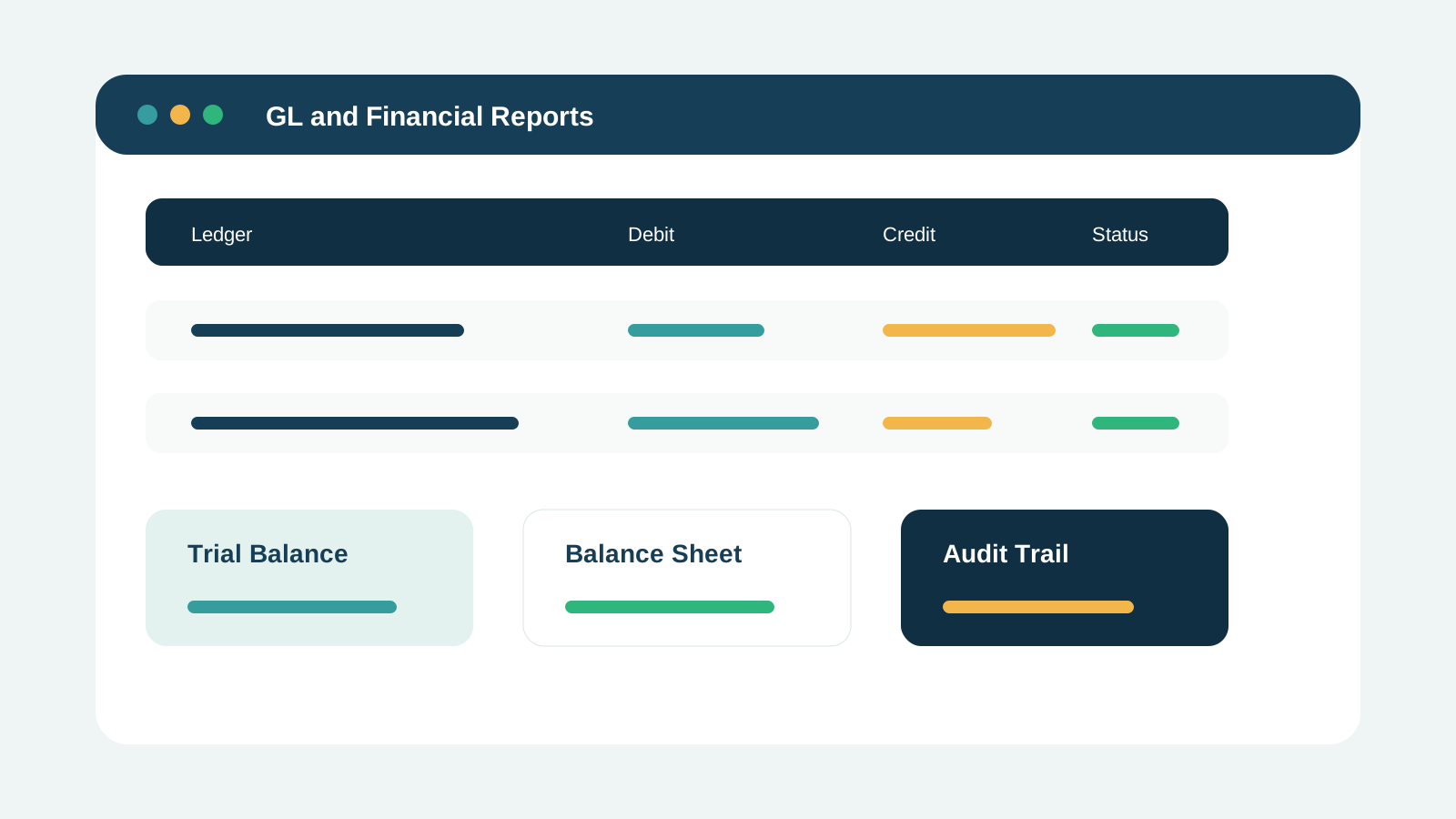
FINANCIAL ACTIVITY CONNECTED TO THE LEDGER
Map product activity to ledger accounts and review journals, trial balance, financial statements, reconciliation and attributable audit history.
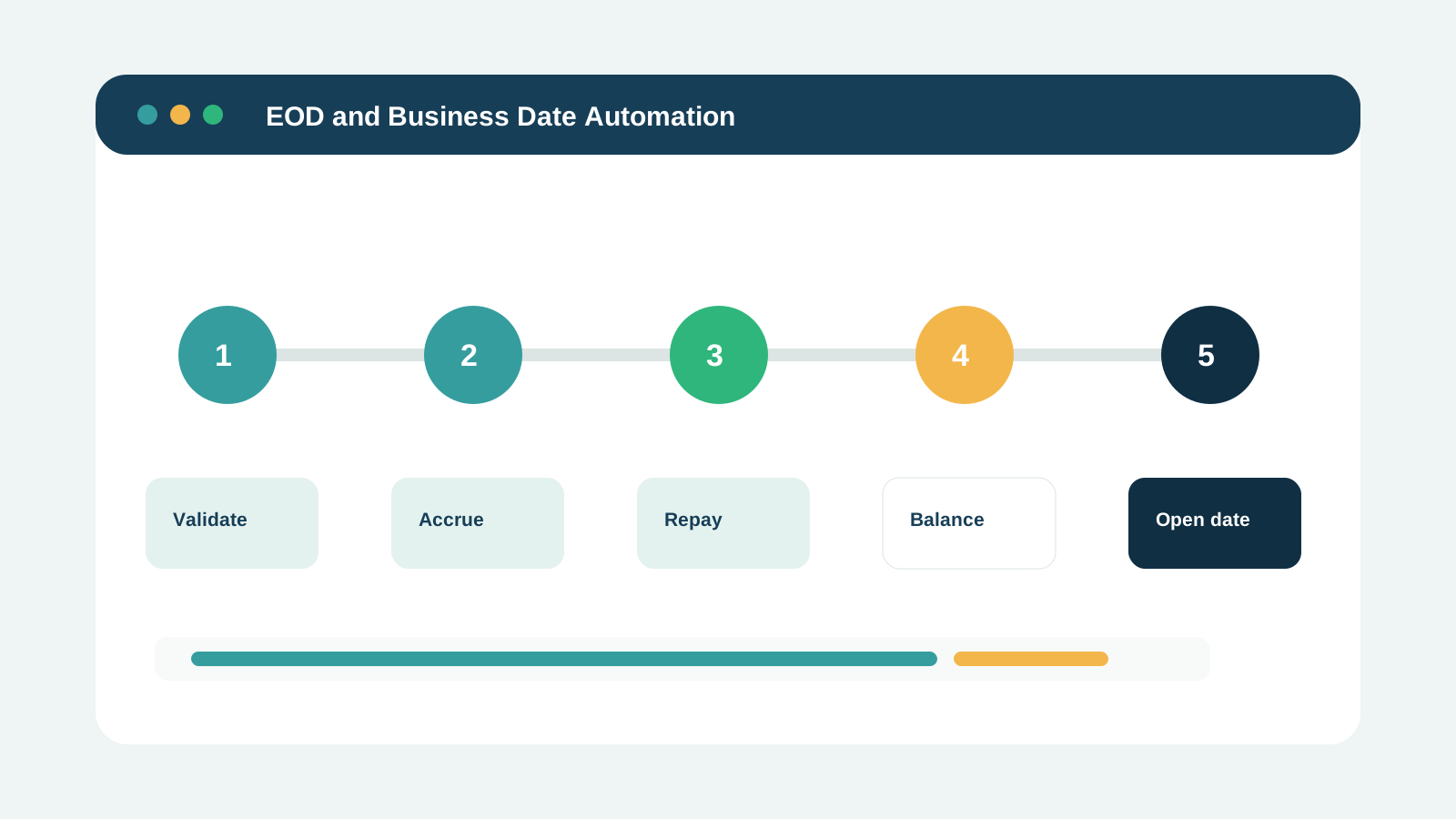
CONTROLLED BUSINESS-DATE PROCESSING
Coordinate end-of-day checks, accruals, depreciation, scheduled repayments, balancing and opening of the next business date through a visible workflow.
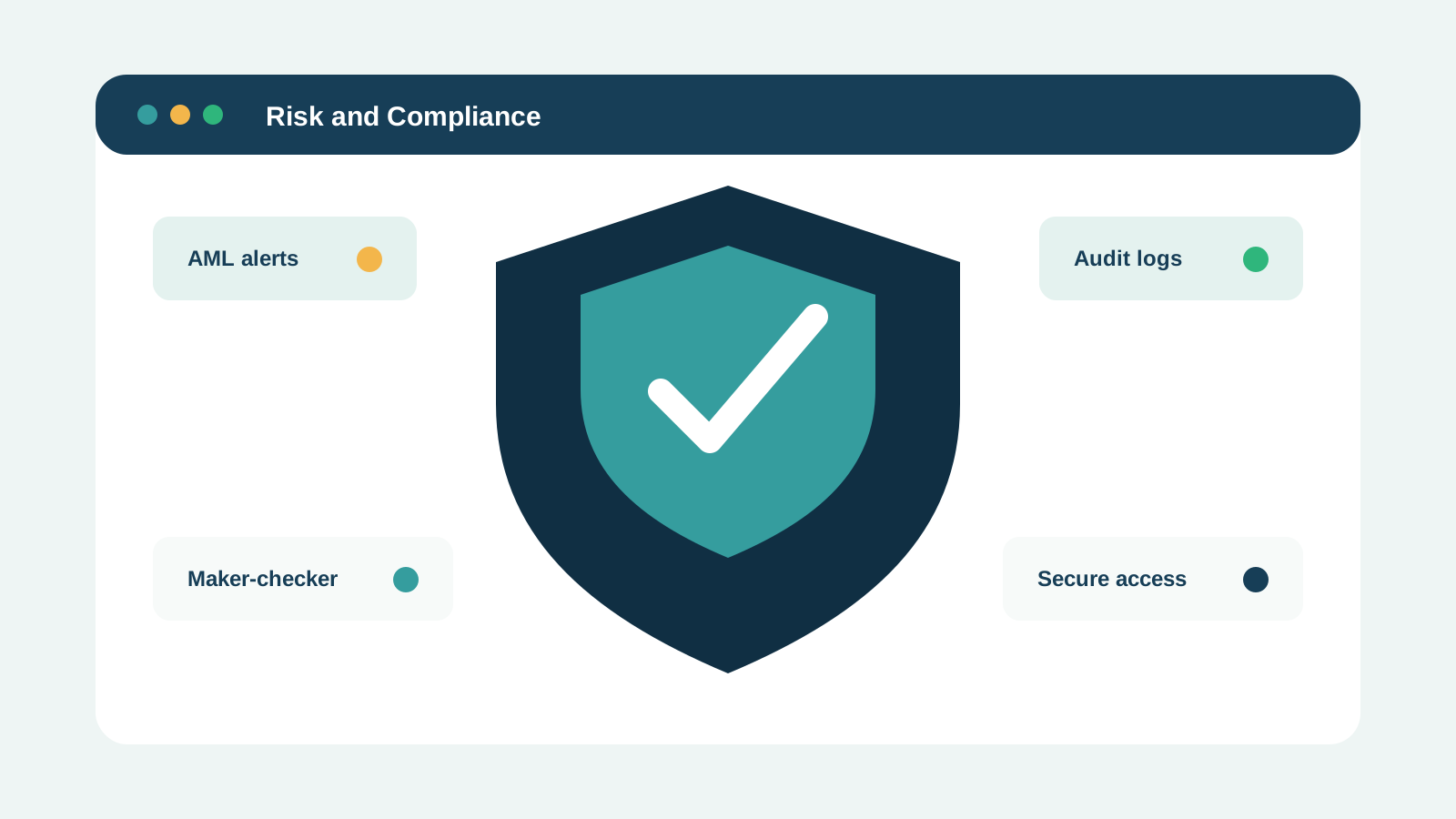
CONTROLS AROUND SENSITIVE ACTIVITY
Monitor selected exceptions, customer-review activity, privileged actions, approval requests and operational compliance information.
Module availability and configuration depend on the selected deployment scope, institution type and implementation requirements.
WHAT'S INSIDE THE CORE
Every module below opens into the real features running under the hood — grouped so you can scan the surface and drill in where it matters.
Feature availability and configuration depend on the selected deployment scope, institution type and implementation requirements.
FOLLOW THE BANKING WORKFLOW
The value of a core is clearer when the full operating journey is visible — rather than presented as a disconnected list of modules.
Capture customer details, identity records, relationships and required review information.
Create the account and apply the selected product, limits, mandates and restrictions.
Process financial activity through configured roles, limits, approvals and statuses.
Manage loans, deposits, scheduled events, exceptions and customer account changes.
Generate operational and financial information from the same system supporting daily activity.
THE FULL CORE BANKING LIFECYCLE
Follow three journeys through the core — lending, deposits and the end-of-day close — to see how configured products turn into accounted activity.
Configured loan products drive assessment, approval, disbursement, accrual and collection — with every event posted to the general ledger automatically.
Capture the application, customer details and supporting documents through a structured workflow.
Run credit bureau checks, review identity records and evaluate against configured product rules.
Route through maker–checker approval stages with full attribution of who did what.
Release funds with automatic postings to the loan account and the ledger.
Nightly jobs accrue interest and penalties against the configured repayment schedule.
Track repayments, prepayments and mandate-driven collections in real time.
Classify delinquency, apply restructuring and keep collections on a visible schedule.
Process write-offs and prudential provisioning with the accounting handled automatically.
Fixed deposits and placements follow configured rules — interest accrues on schedule, maturity settles correctly, and every event lands in the books.
Define interest rules, tenors, rollover instructions and accounting mappings.
Open fixed deposits and placements against customer accounts with full documentation.
Scheduled jobs accrue interest through the term, visible in the deposit record.
Settle at maturity or roll over automatically per the standing instructions.
Process pre-maturity liquidation with the correct penalty and accounting entries.
Every lifecycle event lands in journals, trial balance and financial reports.
33 scheduled jobs run the close: validation first, then accruals, lifecycle events, statements, balancing and the opening of the next business date.
Check pending postings, approvals and exceptions before the date closes.
Run interest accruals across CASA, loans, deposits and placements — plus fixed-asset depreciation.
Process penalties, lien and overdraft events, maturities and settlements.
Generate customer statements and billing documents automatically.
Verify GL balancing and flag any differences for review before opening.
Open the next business date only once the checks pass.
Schedule database backups and size tracking automatically.
Capture prudential and regulatory positions on a defined schedule.
BUILT TO CONNECT AROUND THE CORE
Each approved integration defines its data flow, authentication, monitoring, reconciliation, retry behaviour and operational ownership.
Mobile applications, internet banking and approved USSD experiences.
Transfer, bill-payment, card and other payment-service integrations within the agreed scope.
Identity-verification and onboarding services, including supported MeVerify connections.
Credit bureaus, reporting services and approved financial-service providers.
Notifications, CRM, analytics, document and internal operational tools.
Documented connections for approved institutional, partner and internal systems.
Bearer-token endpoints with a request reference on every call. API keys auto-deactivate after 14 days of inactivity.
Mandate syncs, payment callbacks and AML hold responses flow through defined events — not ad-hoc calls.
Mobile, internet banking and USSD experiences run over the same API layer, so every channel writes to the same core.
Two-factor authentication, permission-controlled releases and institution-level provider configuration.
IMPLEMENTATION IS A CONTROLLED WORKSTREAM
Deployment and migration are planned around the institution's data, products, integrations, operating controls and readiness.

Review institution type, products, volumes, users, branches, channels, reports, controls, current systems and constraints.
Define the institution structure, configurations, roles, environments, integrations, accounting mappings and acceptance criteria.
Configure products and workflows, establish approved connections and prepare institution-specific reporting.
Extract, clean, map, load, validate and balance data through repeatable rehearsal cycles before cutover.
Conduct role-based testing, workflow practice, reconciliation, issue closure and operational-readiness checks.
Launch through an agreed cutover plan with monitoring, reconciliation, escalation and post-go-live review.
WHO IT'S FOR
Final fit depends on the institution's operating model, regulatory position, scale, products, migration requirements and integration scope.
Customer, deposit, lending, teller, branch, ledger and reporting workflows.
Deposits · Lending · BranchesLonger-term lending products, repayment schedules, approvals and financial operations.
Lending · Schedules · ApprovalsAPI-connected lending operations supported by a controlled ledger and servicing workflow.
APIs · Ledger · ServicingMember, savings, lending, repayment and financial-reporting operations.
Members · Savings · ReportingMultiple institutions or financial entities operating through one governed platform.
One platform · GovernanceInstitutions moving away from difficult cores, fragmented tools or spreadsheet-heavy operations.
Migration · Modernisation
FROM THE LEADERSHIP
"Banking infrastructure should never be borrowed from another market. CoreWave CBA exists because African financial institutions deserve a core that fits how they actually operate — built by engineers who stay close to the problem, from discovery to post-go-live."
Working with Pintop was an exceptional experience. They took the time to understand our vision, align with our goals, and deliver results that exceeded expectations.
— Seye Muritala, Credite Capital LimitedFREQUENTLY ASKED QUESTIONS
Product fit, deployment, migration and commercial scope are established through discovery and a focused technical walkthrough.
Speak to the teamYes. CoreWave CBA is designed to run multiple institutions or financial business entities within a single governed environment. Institution separation, shared services, administrative boundaries and deployment responsibilities are reviewed during technical due diligence.
A replacement can be scoped after reviewing the current products, data, integrations, controls, reports and migration complexity. The implementation should include data mapping, migration rehearsals, balancing, user acceptance and a controlled cutover.
CoreWave CBA includes an API and channel layer for approved connected experiences. The available endpoints, authentication, limits and integration responsibilities are confirmed for the selected deployment.
The platform supports configurable lending and deposit workflows. Product rules, interest methods, approvals, lifecycle events and accounting mappings are reviewed against the institution's requirements.
Deployment can be scoped for an approved private-cloud or institution-controlled environment. Infrastructure ownership, access, monitoring, backup, security and support responsibilities are defined for the engagement.
Pricing depends on institution structure, modules, usage, integrations, migration, deployment model, configuration, training and support requirements. A commercial proposal follows discovery.
PRODUCT WALKTHROUGH
Share your institution type, current core, institution structure, priority modules, active-account range, channel requirements and migration concerns. The walkthrough can then focus on the parts that matter.